
Strategic Decision-Making in Business Using the Boston Matrix and Data Mining
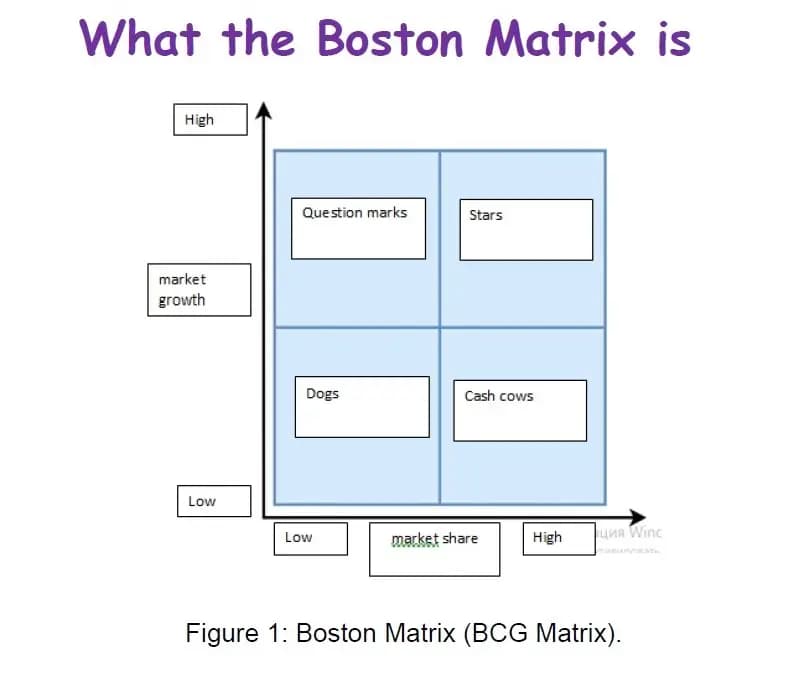
In today's economy, strategic decisions—investments, development, risk mitigation—require tools that combine accuracy and predictive value. One such tool is the Boston Matrix (BCG), which allows for the analysis of product positions by market share and growth rate.
However, the BCG only captures the current state of a business. To account for the future, it is proposed to supplement it with data mining methods that utilize behavioral, financial, and marketing metrics: purchase frequency, seasonality, average order value, loyalty, etc. This allows for the forecasting of product movements between matrix segments, creating a strategically sustainable development picture.
Data mining transforms data into empirical patterns (ERPs), that is, meaningful information necessary for decision-making. This approach allows for the replacement of assumptions with informed opinions based on data. This opinion can already improve management decisions, but remains limited in long-term strategies. To increase reliability, it is necessary to shift from inductive (through data mining) to deductive analysis, including developing and testing hypotheses and establishing cause-and-effect relationships. Only in this way can one achieve a level of knowledge capable of providing strategic advantages.